
The Evolution of IP Addresses: Past, Present, and Future Implications in Cybersecurity
As the world continues to weave technology into the fabric of our everyday lives, few things are as central as the concept of the IP address. It’s something we hear about but seldom think deeply about unless we work in tech or cybersecurity. But what exactly is an IP address? How did it all begin? And most importantly, what does the future hold for IP addresses in a world increasingly dependent on digital security? In this blog, I will explore the evolution of IP addresses from their origin, how they are connected to our devices and the internet, and their pivotal role in cybersecurity today. Let's dive into how IP addresses have evolved and will continue to shape the future of the digital world.
The Birth of IP Addresses The story of the IP address is one that goes hand-in-hand with the origins of the internet itself. Back in the late 1960s and early 1970s, the internet (or ARPANET, as it was then known) was born out of the need for military and research organizations to share information quickly and securely. However, as the network expanded, it became clear that a way to differentiate between computers was necessary. An IP (Internet Protocol) address, in simple terms, is a unique numerical identifier assigned to every device connected to a network. Just as every house needs a postal address to receive mail, every computer or device connected to the internet needs an IP address to send and receive data. But this system was not born overnight. It was the culmination of years of work by early internet pioneers. The earliest form of the internet used a system of hostnames instead of numerical IP addresses. However, as the number of computers on the network grew, this system became unsustainable. Enter IPv4, the first major iteration of the Internet Protocol. IPv4 introduced the now familiar four-number system, with each number ranging from 0 to 255. For instance, a common IP address might look something like 192.168.1.1. This system provided around 4.3 billion unique addresses — more than enough, or so it seemed at the time.
How IP Addresses Work and Connect Us
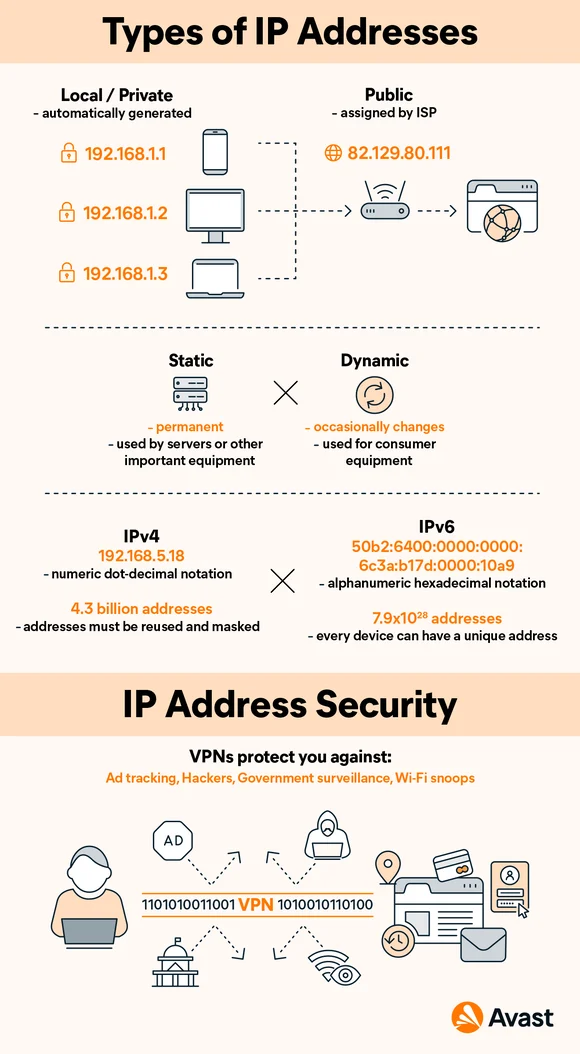
To understand the role of IP addresses in our connected world, it helps to break down how they function. Essentially, an IP address serves as the location identifier for any device connected to the internet. When you visit a website, for example, your device sends a request to the server where the website is hosted. This request is routed through the internet infrastructure, with your IP address acting like a return address so that the website data knows where to go.
IP addresses are assigned by Internet Service Providers (ISPs), who allocate these addresses to your devices when you connect to the internet. These addresses can be dynamic (changing every time you connect) or static (remaining the same for extended periods).
The importance of IP addresses in everyday life cannot be understated. Without them, devices would be unable to communicate over networks, and the internet as we know it wouldn’t function. But with this importance comes a whole host of security concerns.
The Role of IP Addresses in Cybersecurity
In the early days of the internet, the emphasis was on connectivity rather than security. However, as the internet grew, so did the realization that IP addresses could be exploited by malicious actors. One of the most common uses of IP addresses in cyberattacks is through Distributed Denial of Service (DDoS) attacks. In these attacks, hackers flood a server with traffic by sending a massive number of requests from different IP addresses. The goal is to overwhelm the server, making it inaccessible to legitimate users. Another major cybersecurity concern surrounding IP addresses is the potential for geolocation tracking. IP addresses can reveal the approximate location of a device. While this is useful for services like weather apps or location-based recommendations, it also opens the door to privacy concerns. Malicious actors can use this information to track users or target them based on their location. Moreover, IP addresses play a role in hacking attempts. Cybercriminals can scan networks for vulnerabilities by probing IP addresses. Once they identify a weakness in the system, they can exploit it to gain unauthorized access. This is why companies invest heavily in firewalls and intrusion detection systems to monitor and protect their networks. Another growing trend in the realm of cybersecurity is the use of IP spoofing, where attackers disguise their own IP address to appear as though they are operating from a trusted source. This technique is often used in phishing attacks or other social engineering efforts. The attacker masquerades as a trusted entity, tricking the target into divulging sensitive information or installing malware.
IPv4 and the Roadblock to Growth
IPv4 served the internet well for decades, but as the number of devices connected to the internet grew, the limitations of the protocol became apparent. Remember, IPv4 only allowed for around 4.3 billion unique addresses. By the late 1990s, it was clear that this number would not be enough to sustain the growing internet. The explosion of smartphones, IoT (Internet of Things) devices, and the increasing number of users across the globe put pressure on the system. This impending shortage led to the development of IPv6, a new version of the Internet Protocol designed to solve the address exhaustion problem. IPv6 uses a 128-bit address system, allowing for an almost inconceivably large number of unique IP addresses — roughly 340 undecillion, which is enough to assign a unique address to every grain of sand on Earth, multiple times over. While IPv6 was introduced in the late 1990s, its adoption has been slow. Many networks still rely on IPv4, and for most users, the transition to IPv6 has been largely invisible. However, IPv6 is crucial to the future of the internet, especially as the number of internet-connected devices continues to skyrocket.
The Present: The IP Address Dilemma and Its Impact on Security
Today, we live in a world where every aspect of life is connected to the internet — from our smartphones to our refrigerators, smartwatches, and even our cars. The rise of IoT devices has made the management and security of IP addresses even more critical. With millions of new devices coming online every day, the pressure on IPv4 is immense. The shortage of IPv4 addresses has led to the use of Network Address Translation (NAT), a technology that allows multiple devices to share a single public IP address. While NAT has helped extend the life of IPv4, it introduces complications when it comes to security. NAT obscures the true IP addresses of devices behind a single shared address, making it harder to trace cyberattacks to their source. From a cybersecurity perspective, the proliferation of devices has created new opportunities for hackers. Each new device represents a potential entry point into a network. Unfortunately, many IoT devices are poorly secured, making them easy targets for hackers looking to exploit vulnerabilities. This has led to high-profile incidents, such as the Mirai botnet attack in 2016, where hundreds of thousands of IoT devices were compromised and used to launch massive DDoS attacks. Another security concern is the black market for IP addresses. As IPv4 addresses become increasingly scarce, a black market has emerged where individuals and companies buy and sell these addresses. This creates a major security risk, as attackers can purchase IP addresses that were previously associated with legitimate organizations and use them for malicious purposes.
The Future: What’s Next for IP Addresses?
Looking ahead, the transition to IPv6 is inevitable. As the number of devices continues to grow, the limitations of IPv4 will become increasingly apparent, and IPv6 will become the dominant protocol. However, the shift to IPv6 presents its own set of challenges. For one, the adoption of IPv6 will require significant changes to network infrastructure. Organizations will need to invest in upgrading their systems, and some legacy devices may not be compatible with IPv6. There’s also the issue of cybersecurity. While IPv6 addresses some of the security concerns of IPv4, such as address exhaustion and NAT, it introduces new challenges. For example, the larger address space of IPv6 makes it harder to scan networks for vulnerabilities, which could be both a blessing and a curse for cybersecurity professionals. In terms of privacy, IPv6 presents its own set of concerns. Unlike IPv4, where NAT can provide a degree of anonymity by masking devices behind a shared public address, IPv6 assigns each device its own unique public address. This could make it easier for hackers or governments to track individual devices across the internet, raising privacy concerns.
Furthermore, as artificial intelligence and machine learning continue to advance, IP addresses could play an even larger role in the digital landscape. AI-powered systems could use IP address data to detect and respond to cyber threats in real-time, offering new opportunities for improving cybersecurity.
Cybersecurity Implications and Future Threats The connection between IP addresses and cybersecurity will only grow stronger in the coming years. As our dependence on the internet deepens and the number of connected devices increases, so too does the potential attack surface for cybercriminals. One area of concern is the growing sophistication of cyberattacks. Advanced Persistent Threats (APTs) are a significant challenge for organizations today, and IP addresses often play a key role in these attacks. In an APT, attackers use a variety of techniques to remain hidden within a network for long periods, using IP addresses to maintain their foothold and exfiltrate data without detection. Additionally, the rise of 5G and the increasing connectivity of everyday devices through IoT opens new avenues for attacks. As more devices become connected, the risk of large-scale attacks increases. Imagine a scenario where hackers exploit vulnerabilities in IoT devices to gain control of critical infrastructure, such as power grids or transportation systems. The consequences could be devastating.
Furthermore, the future of IP addresses and cybersecurity will likely be shaped by regulations. Governments around the world are becoming increasingly aware of the risks posed by cyber threats, and new regulations will likely be introduced to protect users and businesses. These regulations could include stricter requirements for the allocation and management of IP addresses, as well as enhanced security protocols for IoT devices.
IP Addresses and Personal Privacy
While cybersecurity often focuses on protecting systems and networks, personal privacy is another critical issue tied to IP addresses. As more devices become connected to the internet, the ability to track individuals based on their IP address will become easier. This raises concerns about government surveillance, corporate tracking, and the potential for data breaches. The debate over privacy and IP addresses is a complex one. On the one hand, IP addresses are necessary for the internet to function. On the other hand, the ability to associate an IP address with a specific individual or device raises significant privacy concerns. As technology advances, finding the right balance between connectivity and privacy will be a key challenge. Moreover, with the advent of smart homes, smart cities, and wearable technology, the amount of data generated by IP addresses is growing exponentially. Governments and corporations are increasingly using this data to monitor and track individuals, raising questions about the future of personal privacy in a hyper-connected world.
Final Thoughts: The Road Ahead for IP Addresses As we look to the future, one thing is clear: IP addresses will continue to play a central role in the digital world. From the early days of IPv4 to the slow but steady adoption of IPv6, the story of IP addresses is one of evolution and adaptation. But with this evolution comes new challenges, particularly in the realm of cybersecurity. As more devices become connected to the internet, the need for robust security measures will only increase. Cybercriminals will continue to exploit vulnerabilities in IP address systems, and organizations will need to stay one step ahead by investing in new security technologies and protocols.
At the same time, we must remain vigilant about protecting our personal privacy. The ability to track individuals based on their IP address is a double-edged sword, offering both convenience and the potential for abuse.
In the end, the future of IP addresses is inextricably linked to the future of the internet itself. As the internet continues to grow and evolve, so too will the ways we use, secure, and manage IP addresses. By staying informed and proactive, we can help shape a future where IP addresses remain a force for connectivity and security, rather than a vulnerability to be exploited.